Author: Melanie Jordan

  • Emotional Dysregulation

    Emotional Dysregulation

    The Pause Between the Feeling and the Reaction

    The Pause Between the Feeling and the Reaction

    By Melanie

    For many years, my emotions ran the show. Intense bursts of anger, waves of anxiety, and stretches of numbness were part of my daily life, and it took me decades to find something that helped. Traditional therapy wasn’t that something for me. Retelling my trauma over and over to be analyzed left me feeling worse, not better. That is my experience only, and I know many people have been helped by therapy. What worked for me was different: Affirmations, and later Somatic breathing, shadow work, and NLP. I’m not claiming a cure, but my emotional dysregulation has lessened, and I understand myself far better than I used to. Here is how it happened.

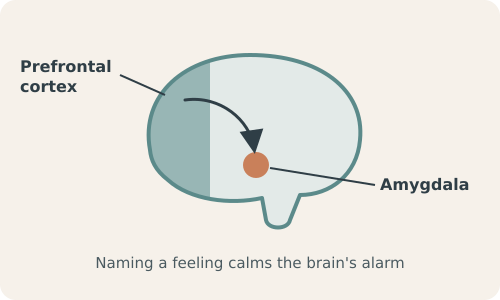
    The biggest shift came when I discovered the pause. Just before an emotion bursts out in words or action, there is a sliver of silence, and I learned to get curious inside it. In that moment, I ask myself: Where do I feel this in my body? Where is it coming from? Is it even mine to respond to? Science supports this approach. Researchers have found that simply naming an emotion, known as affect labeling, is associated with less activity in the amygdala, the brain’s alarm system, and more engagement from the prefrontal cortex, the part that helps us regulate (Lieberman et al., 2007). Likewise, noticing physical sensations, called interoception, builds the self-awareness that makes the pause possible (Craig, 2002).

    I sometimes ask whether a feeling is inherited or borrowed from someone else. That question is less strange than it sounds, because we learn emotional patterns from the people who raised us, and feelings can be contagious.

    The body is where this work becomes real. Somatic breathing helped me release tension I didn’t know I was holding, especially in my face, where I had spent years grinding and clenching. The research points the same way. Slow, controlled breathing has been shown to increase heart rate variability and activate the parasympathetic nervous system, which signals the body to settle out of fight-or-flight (Zaccaro et al., 2018).

    Affirmations have research behind them, too. Studies on self-affirmation show that reflecting on your values and worth can activate reward and self-related regions in the brain and soften the stress response (Creswell et al., 2005; Cascio et al., 2016). Neither practice is magic, and neither is for everyone, but both work for me.

    Here is what I’ve learned most: we are not our emotions. Please don’t hear that as “smile like the Joker and pretend everything is fine.” We are human, and feelings will come up. What I’m inviting you to do is sit with them, breathe, listen, and then decide how to respond, rather than letting the feeling decide for you. This human body was given to us to care for, and caring for it means learning its language. An emotion rises and falls like a wave, and the pause is where your power lives.


    Sources

  • Wired for Survival: Why You Aren’t Crazy, You’re Just Dysregulated

    Wired for Survival: Why You Aren’t Crazy, You’re Just Dysregulated

    I used to be convinced I was born without an emotional steering wheel. For years, feelings weren’t just temporary moods; they were full-blown catastrophic weather events that hijacked my entire life. If anxiety showed up, it didn’t just knock on the door—it blew the roof off. What I didn’t know back then was that I wasn’t crazy or inherently defective; I was simply living inside a nervous system that had been wired for extreme survival before I was even old enough to ride a bike.

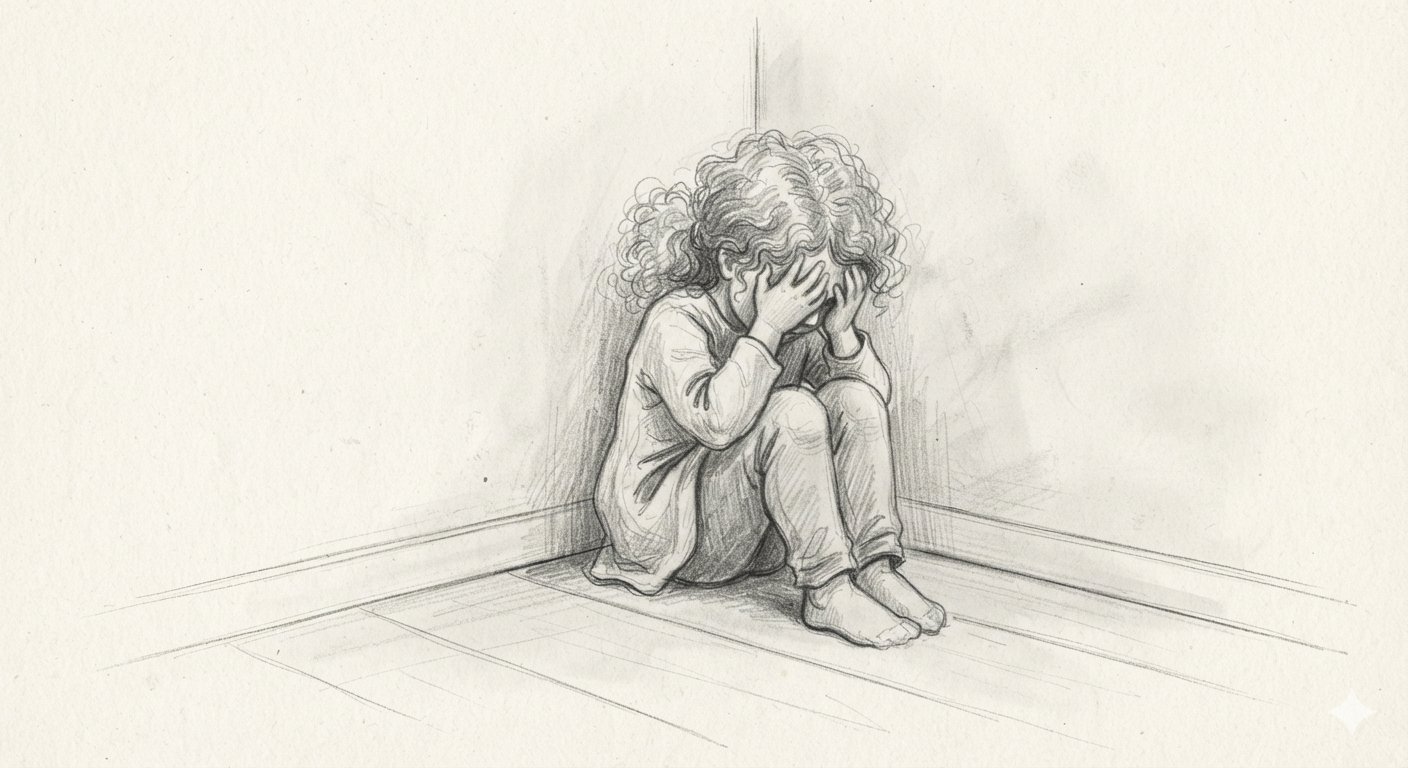
    When you’re a child, your home is supposed to be a sanctuary. Mine was a battlefield. From the time I was six until I finally left at fifteen, my mother’s explosive rage dictated my reality. I can still recall the weight of her sitting on me, pinning me down while her nails dug into my skin. I remember her hands locked tight in my hair, slamming my head repeatedly into the hard floor while screaming in my face. You don’t just walk away from years of that kind of violence unharmed; your body logs every second of it and builds an emergency alarm system designed to keep you on high alert forever.

    Inevitably, that raw trauma followed me straight into adulthood. Every minor disagreement, every tense conversation, or sudden change in plan felt like a life-or-death threat. My brain couldn’t distinguish between a bad day at work and being six years old on that cold, hard floor again. I spent decades locked in severe emotional dysregulation—flooding with panic, freezing in fear, or reacting with defense, only to be crushed by shame immediately afterward. I thought I was broken, completely unaware that my body was simply playing back old, desperate survival programs.

    The shift didn’t happen overnight, but it started with one powerful realization: we are not our emotions. Feelings are not your identity; they are merely temporary chemical signals rolling through your nervous system based on old conditioning. When a wave of panic or anger hits, it isn’t you—it’s just information moving through you. Learning to regulate my nervous system and separate my core self from the emotional storm was the hardest, most necessary work of my life. I still have hard days—feelings can still catch me off guard—but I no longer let the storm drive the car.

    If you are sitting there right now feeling consumed by your own feelings, please hear me: I get it. I’ve been in that dark, confusing place, and you are not broken for feeling overwhelmed. If you take away just one practical tool today to start regulating your emotions, let it be this: The moment you feel flooded, pause and take one slow breath with an exhale that is intentionally longer than your inhale. A long, extended exhale instantly communicates safety directly to your nervous system, slowing your heart rate and giving you the space to remember that you are the conscious space holding the emotion—never the emotion itself.

  • Finding Your Center: Why Peace Isn’t a Destination, It’s a Gentle Shift

    Finding Your Center: Why Peace Isn’t a Destination, It’s a Gentle Shift

    I was recently watching a YouTube interview hosted by Andre Duqum featuring Jim George, a stillness expert with 50 years of experience. During their conversation, Jim shared a very cool, simple visual for stepping straight into Stillness. Whenever life gets chaotic, Jim George suggested imagining a golden cord with a red velvet handle hanging just inside your periphery. He said, “Simply reach out, give that velvet handle a gentle tug, and drop straight into stillness.”

    What makes this simple visual so effective comes down to how our minds function behind the scenes. Our conscious mind is often like a house with every light on—moving from room to room, noticing every sound, thinking about what happened yesterday, what needs to happen tomorrow, and responding to everything happening around us. Beneath all of that is another part of us quietly holding our familiar patterns, memories, beliefs, and automatic reactions.

    When we intentionally picture pulling that golden cord, we give our mind something simple and immediate to focus on. I’m spiritual. I believe pulling that beautiful golden cord with red colored velvet brings us to our Higher Self.  Rather than continuing to follow every thought that pulls for our attention, we create a pathway toward stillness ( Our Higher Self ). That simple visual can become a signal of safety—a way of reminding the body and mind, You don’t have to respond to everything right now.

    Understanding this shift helps unlock a deeper truth about our healing journey. Jim pointed out that we aren’t meant to stay permanently tucked away in a state of stillness. Life is dynamic. We have conversations, responsibilities, emotions, surprises, and sometimes complete chaos. We naturally move between different states throughout the day.

    Another way to think about this is that it’s like having a quiet room inside yourself.

    You don’t move into that room and stay there forever. You simply know it is there.

    When the outside world becomes loud, you can step inside for a moment. You can breathe. You can settle. You can remember who you are. And then, when you’re ready, you can step back out into your life without having to carry all that noise with you.

    Realizing we are meant to move back and forth between these states transformed how I supported the child within me over my 20-plus years on my own healing path. In my early years, whenever anxiety flared up, the scared little kid inside me would want to panic, and I used to think I had to fight my thoughts to earn peace.

    Learning Jim’s gentle approach shifted something in me.

    Instead of fighting the overwhelm, I began inviting my inner child to reach up and pull that red velvet handle with me.

    Not to make the feelings disappear.

    Not to force myself to be calm.

    Just to remind that little part of me that there was somewhere safe to go.

    That simple, shared action gave my inner child something concrete to do when everything inside felt uncertain. We weren’t fighting the fear anymore. We were turning toward safety together.

    And maybe that’s what healing has taught me more than anything:

    Peace isn’t something you have to work for to receive.

    Sometimes, it is simply remembering that you already have a way back to yourself.

    The next time life feels overwhelming, imagine that golden cord hanging just inside your mind’s eye. Reach for the red velvet handle. Give it a soft pull. Take a breath.

    And for a moment, step into that quiet room within you.

    It’s been there all along.

    Thank you, Jim George 

  • Why I Hypnotized Myself (And No, I Didn’t Cluck Like a Chicken)

    Why I Hypnotized Myself (And No, I Didn’t Cluck Like a Chicken)

    If there is one thing that I’ve learned on this Wild healing journey, it’s that our minds and bodies are much more flexible than we think. Years ago, I started looking into the work of Dr. David Spiegel, an amazing psychiatrist at Stanford who is basically the modern godfather of clinical hypnosis. For those of you who think hypnosis is just a stage trick to make you cluck like a chicken, think again. Dr. Spiegel’s research scientifically proved exactly what I had been feeling in my own body. His work shows that going into a deep, focused state helps us get past our usual walls and actually change how our bodies hold onto trauma. It felt so good to see real science back up the healing I was already doing.

    Breathwork has always been my anchor. I’m very spiritual, and I remember one specific night, long ago in the quiet of my own home, when I essentially hypnotized myself. I was deep into my breathing practice. I felt the usual tight, nervous energy humming in my arms and legs, but this time, something shifted. I saw that beautiful, comforting white light I always look for, and clear messages started coming through. It was a perfect mix of Dr. Spiegel’s science and my own spiritual connection—a moment where my body finally felt safe enough to drop its guard.

    But there is one absolute rule when you do this work, and both Dr. Spiegel and my own body agree on it: you cannot rush the release. That night, I felt lifetimes of stress coiled up inside me—honestly, I was carrying more emotional baggage than a delayed flight out of Miami—but I knew I had to let it go little by little. Dr. Spiegel explains that you have to face trauma in small, manageable pieces so you don’t “flood” or overwhelm your system. If you try to force all that pent-up energy out at once, your nervous system will panic and shut down. Instead, you have to let it leak out slowly. With every single breath you take, a tiny valve opens, letting the pressure out safely.

    So, to my readers and my beautiful clients, I want you to know exactly what this kind of release actually looks like. It is rarely just a peaceful, quiet meditation where you float on a cloud. When your body finally lets go of the pain it has been hoarding, the reaction is very real and very physical. That night, as I let the energy leak out, I experienced a flood of tears, a sudden flash of raw anger, and my muscles actually started shaking on their own. I felt all of it, and let me tell you, the release was incredibly powerful. We spend so much of our lives trying to keep it all together, but there is real magic in finally permitting yourself to safely fall apart, breath by breath as you show compassion and come back to your authentic-self.

  • My Healing Journey & Florence Scovel Shinn

    My Healing Journey & Florence Scovel Shinn

    I’ve spent over twenty years on this healing journey, untangling the complex web of CPTSD -Chronic Post-Traumatic Stress Disorder- and learning how to navigate a body that spent decades hyper-vigilant and bracing for impact. I used to think healing meant reaching some flawless, polished finish line where the past completely disappeared. Today, I know better. I’m not 100% healed, and honestly? That’s perfectly okay with me. What matters is that I learned how to move out of survival mode, regulate my system, and succeed in building a life filled with connection, joy, and purpose. Over the years, I’ve gathered a whole toolkit of practices, but one unexpected guide along the way was Florence Scovel Shinn’s 1928 classic, ‘Your Word Is Your Wand. “

    (more…)